
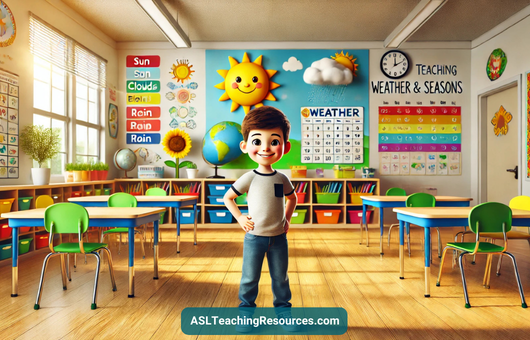
Have your students ever looked out the window to guess “what’s the weather today?” Weather is a powerful teaching tool, especially in ASL classrooms, because it naturally grabs attention. Teaching weather and seasons helps students connect daily routines with language, visuals, and real-world meaning. No matter the abilities of your students, sign language is a perfect way to build communication skills in your classroom without adding stress to your day.

What’s the Weather Today: A Quick Classroom Story 📖
Picture a cheerful Monday morning. Your students walk in, hang up their backpacks, and head straight to the classroom weather display. One student eagerly signs “SUNNY,” another checks the window and signs “CLOUDY.” Before you even start your lesson, your class is already signing, observing, and communicating.
This is the magic of a consistent weather routine. It turns everyday moments into meaningful language practice.
FREE WEBINAR ALERT!
My Proven System to Learn & Teach ASL Confidently
Discover powerful tips and time-saving tools to help you with ASL, even if you’re seasoned or just getting started.
✅ Perfect for all ages
✅ Designed for busy teachers and you
✅ Includes ready-to-use ASL resources
🎁 BONUS: When you sign up, you receive surprises in the training.
Hurry! Register while this event is free.

Introduction to Weather and Climate
Starting the day with signing about the weather helps young learners build a strong foundation before introducing more complex concepts, such as seasons and climate. Using sign language makes these concepts visual and concrete. Students do not just hear about the weather. They see it, sign it, and interact with it.
Who This Can Help
This approach works especially well for:
- ASL teachers and interpreters
- Special education teachers
- Speech pathologists
- Homeschool families
- Daycare and preschool educators
If you teach students who benefit from visual learning and predictable routines, weather instruction in sign language is a perfect fit.
How Teaching Weather in ASL Helps Students
Teaching weather and the seasons through sign language supports:
- Daily expressive and receptive language practice
- Improved comprehension for non-verbal and emerging communicators
- Vocabulary development tied to real-life experiences
- Fun classroom routines and transitions
Lessons about weather are short, repeatable, and meaningful. That combination is gold for busy educators.
Weather and the Seasons Made Simple 👍
Start by connecting weather and seasons. For instance:
- Winter often brings cold, snow, and wind
- Spring includes rain and warmer temperatures
- Summer is hot and sunny
- Fall can be cool and windy
Signing these concepts daily helps students naturally understand patterns over time without needing long explanations.
Using a Classroom Weather Display
A classroom weather display gives students a visual anchor. When students can see the signs, symbols, and words together, comprehension improves quickly.
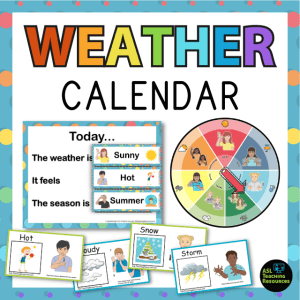 A ready-made option like the Classroom Weather Calendar from ASL Teaching Resources saves time and keeps everything consistent. It allows students to:
- Identify today’s weather
- Practice weather signs daily
- Track changes across days and seasons
This type of display becomes part of your routine rather than another thing on your to-do list.
👉Grab your Classroom Weather Calendar Bundle here!
Tips for Teaching the Weather in Sign Language
💡Tip 1: Let Students Lead
Rotate helpers to sign the weather, move pieces on the calendar, or point to the correct symbols.
💡Tip 2: Use an Anchor Chart
A weather and climate anchor chart helps students visually connect signs with meanings. Reference it during lessons often.
💡Tip 3: Encourage a Daily Routine
Consistency is key. Ask “What’s the weather today?” every morning in sign language. Encourage older students to ask each other.
💡Tip 4: Keep Language Simple
Focus on clear, functional signs before adding extra details. Simple is effective.
Weather and Climate Anchor Chart Ideas
Anchor charts should be:
- Clear and uncluttered
- Visual with signs and images
- Used daily, not just displayed
The ASL weather chart will become a trusted reference point once students see it every day.
Sign Language Weather Vocabulary to Start With
Begin with high-frequency weather signs such as:
- Sunny
- Rain
- Cloudy
- Windy
- Snow
- Hot
- Cold
These signs connect directly to students’ daily experiences, making learning feel natural.
👉Want to see these signs in action? Watch our playlist on YouTube!
Common Questions About Teaching the Weather
Q: What are the best ways to teach weather to deaf or hard-of-hearing students?
A: Sign language, visuals, daily routines, and hands-on classroom displays.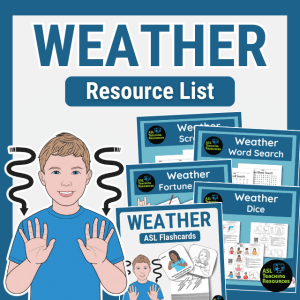
Q: Why is weather important in early learning?
A: Weather builds observation skills, vocabulary, and daily communication.
Q: How do visual schedules help with weather lessons?
A: They create predictability and reduce confusion, especially for special needs learners.
Q: Where can I find ASL teaching materials for weather and seasons?
A: Try our ASL Weather Resources List!
What’s the Weather Today: Big Takeaways
✅ Don’t overcomplicate lessons about the weather.
✅ Combine sign language, visuals, and consistent routines so students can learn naturally.
✅ Powerful communication opportunities present themselves when teaching weather and seasons in ASL.
✅ With tools like a classroom weather calendar and clear anchor charts, you save time while giving students language they can actually use.
Ready for Your Students to Sign the Weather and Seasons?
- Explore more ASL Fun with Weather.
- Subscribe to our YouTube channel.
- Check out our Sign Language Books on Amazon.
ADDITIONAL RESOURCES:
- 5 Practical Strategies for Teaching About the Weather
- Simple Ways to Teach Preschoolers about Clouds
- Weather Words for Kids: Boosting Early Communication
- Mini Meteorologists: Teaching Weather Science
- ASL Calendar: Teaching Time Concepts
- How to Learn ASL Fast and Easy
- ASL for Beginners: Your First 25 Classroom Signs